Chemical Engineering

PM-DAC: PASSIVE MODULAR DIRECT AIR CAPTURE

Development of a novel, cost-effective device and sorbent for CO₂ capture directly from the air.

Complete🏆 Patent GrantedDesign Engineering

Direct Air Capture Module Design

What is Direct Air Capture?

Put simply, Direct Air Capture is a technology that removes carbon dioxide directly from the atmosphere using chemical or physical processes.

For more background, see my blog post Intro to Direct Air Capture— it's not essential for understanding the engineering in this project, but it provides context for some of the design decisions.

Design Principles

Modular & Scalable

Each device is designed to be modular and tessellate with neighboring modules to form a larger network. This draws inspiration from the solar industry: despite varying roof layouts, identical panels from a single manufacturing line can be deployed efficiently at scale.

Core Structure

At the heart of each module is a cylindrical chamber, the structural core. Modules take a hexagonal form, the most efficient packing shape for circles.
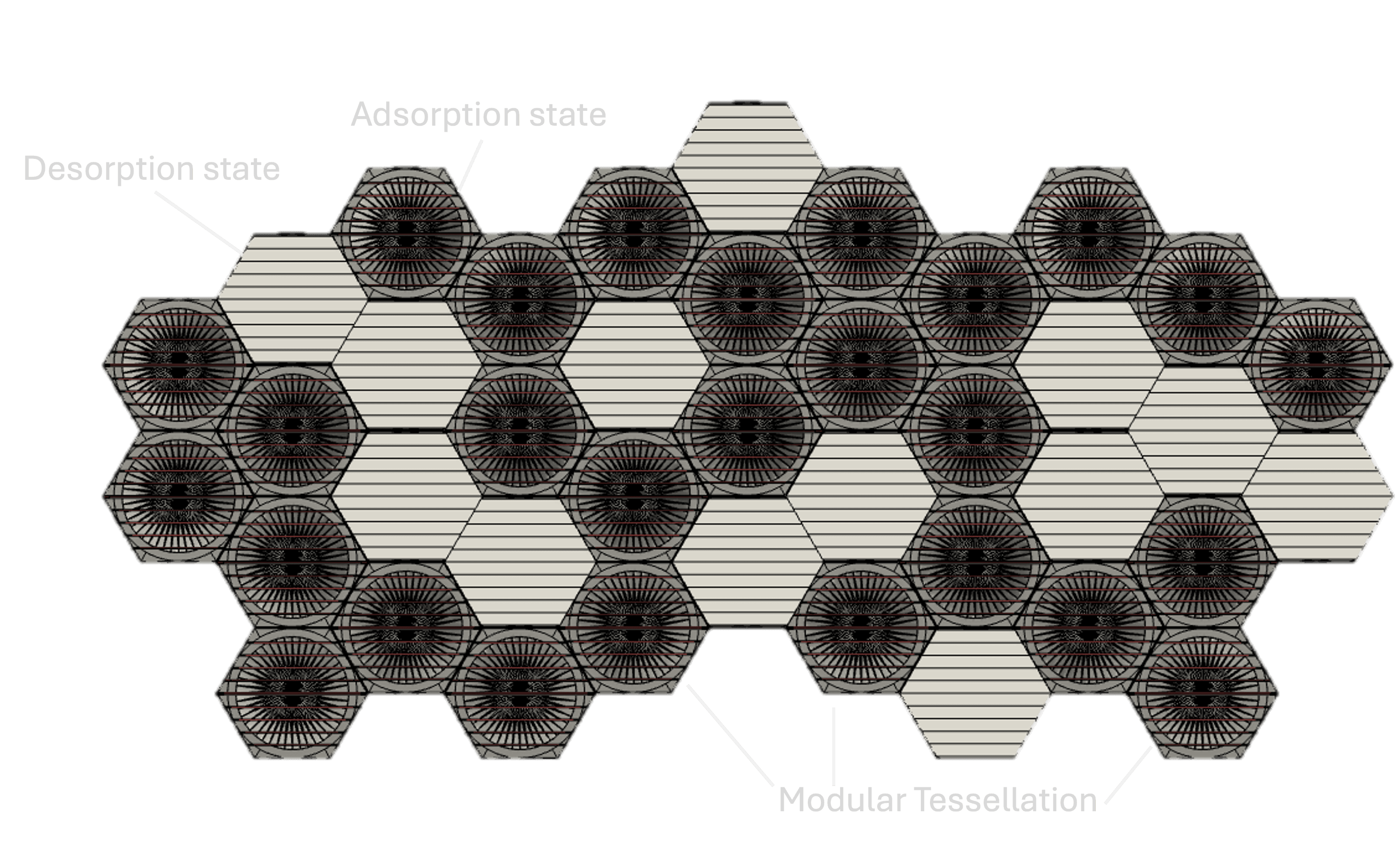
Modular Design Layout
Fig. 1 — Modular Design Layout.

Prototyping & Manufacturing

3D printing was used extensively for early development to create prototype parts and assemblies, especially for valve assembly fit checks on the central chamber and actuated flap mechanisms for air intake/exhaust.
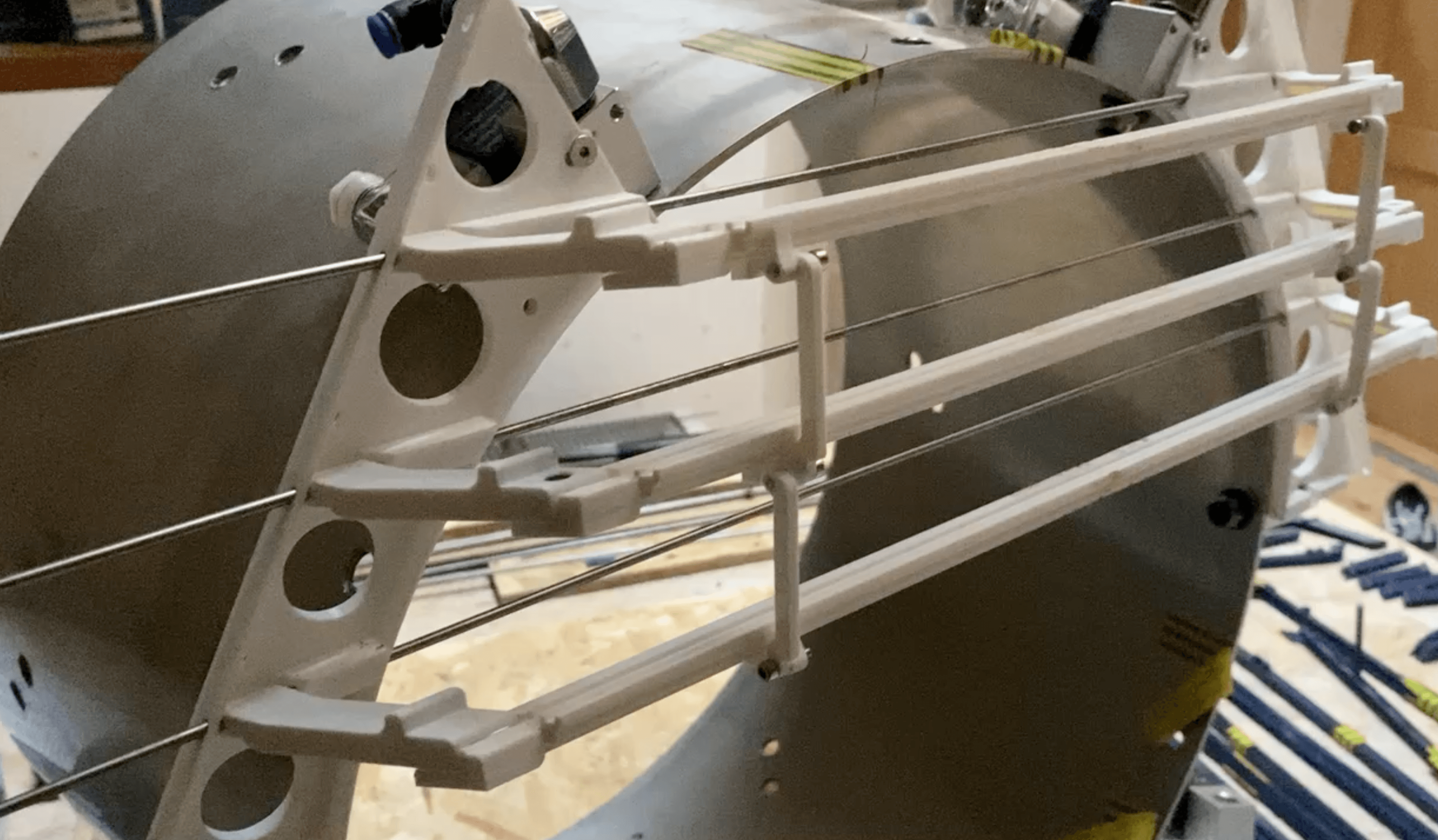
3D Printed Prototypes
Fig. 2 — 3D Printed Prototypes.

Transition to Production

Central Chamber

3D printed prototypes informed the placement of valve holes. Final manufacturing involves flat 3 mm stainless steel sheet, pre-drilled, cold rolled into a tapered cylinder, and seam welded for strength.

Actuated Flaps

Final design flat-folded from stainless steel sheet. Fusion 360's static load testing showed that 2 mm sheet metal was sufficient to withstand vacuum loads.
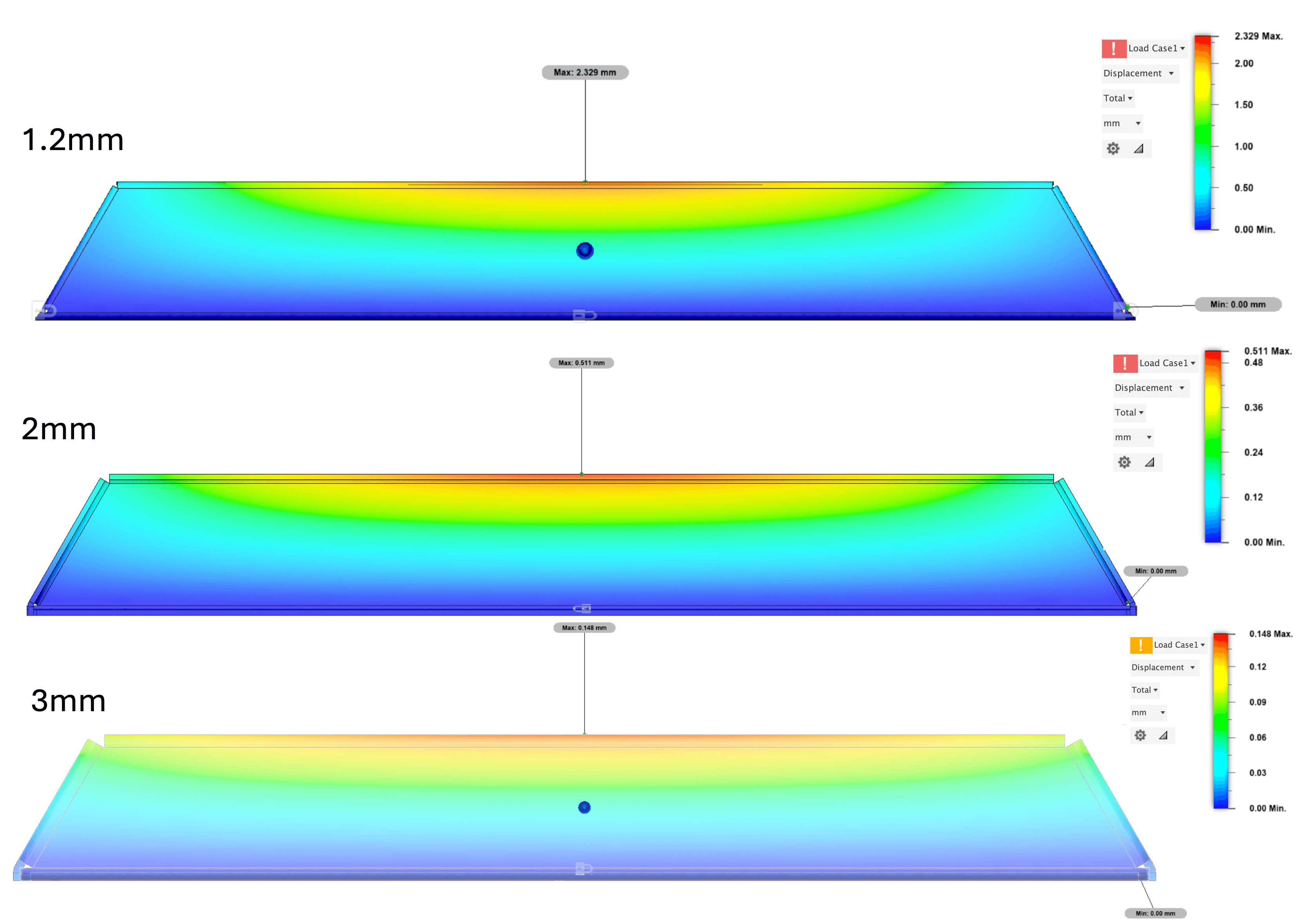
Structural Analysis
Fig. 3 — Structural Analysis.
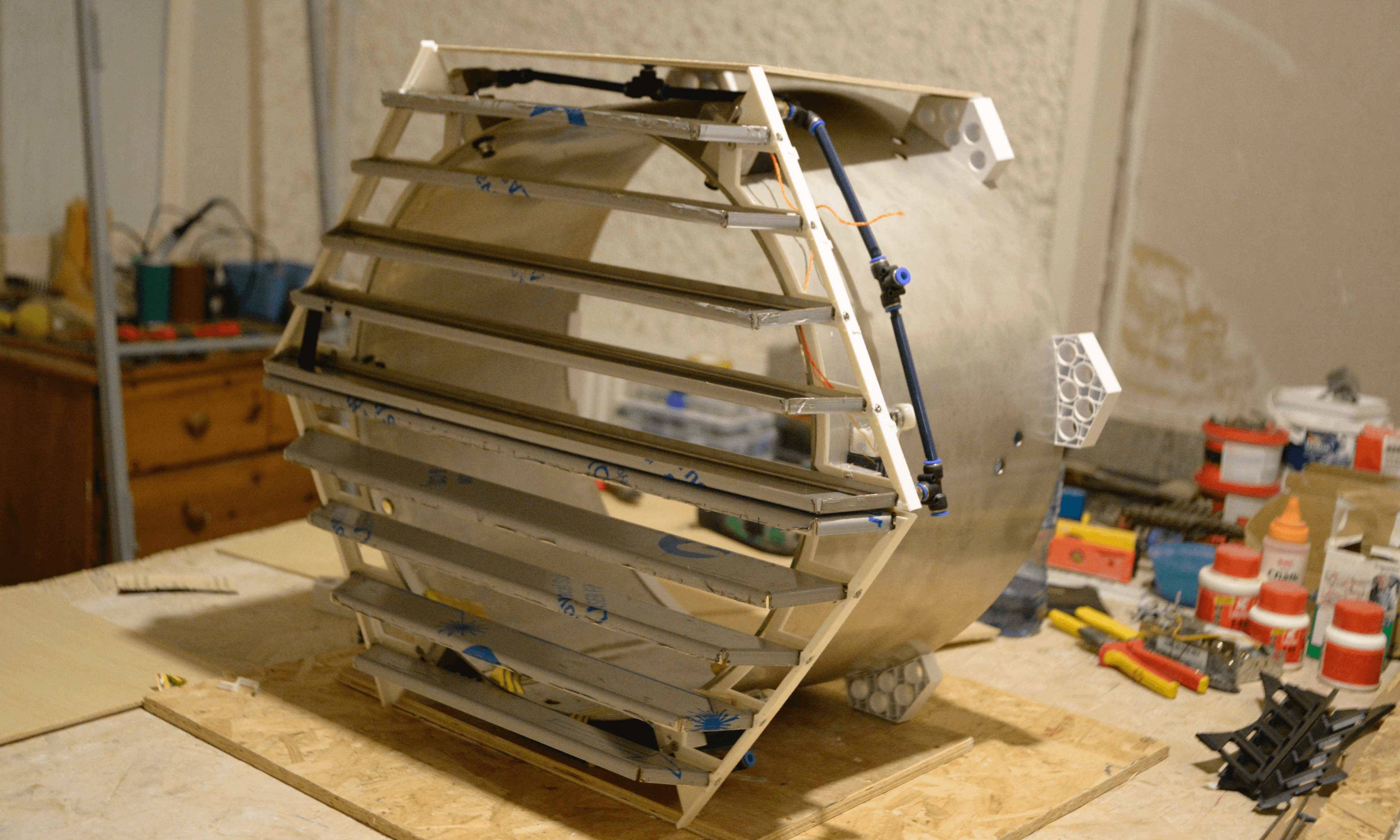
Manufacturing and Assembly
Fig. 4 — Manufacturing and Assembly.

How it Works

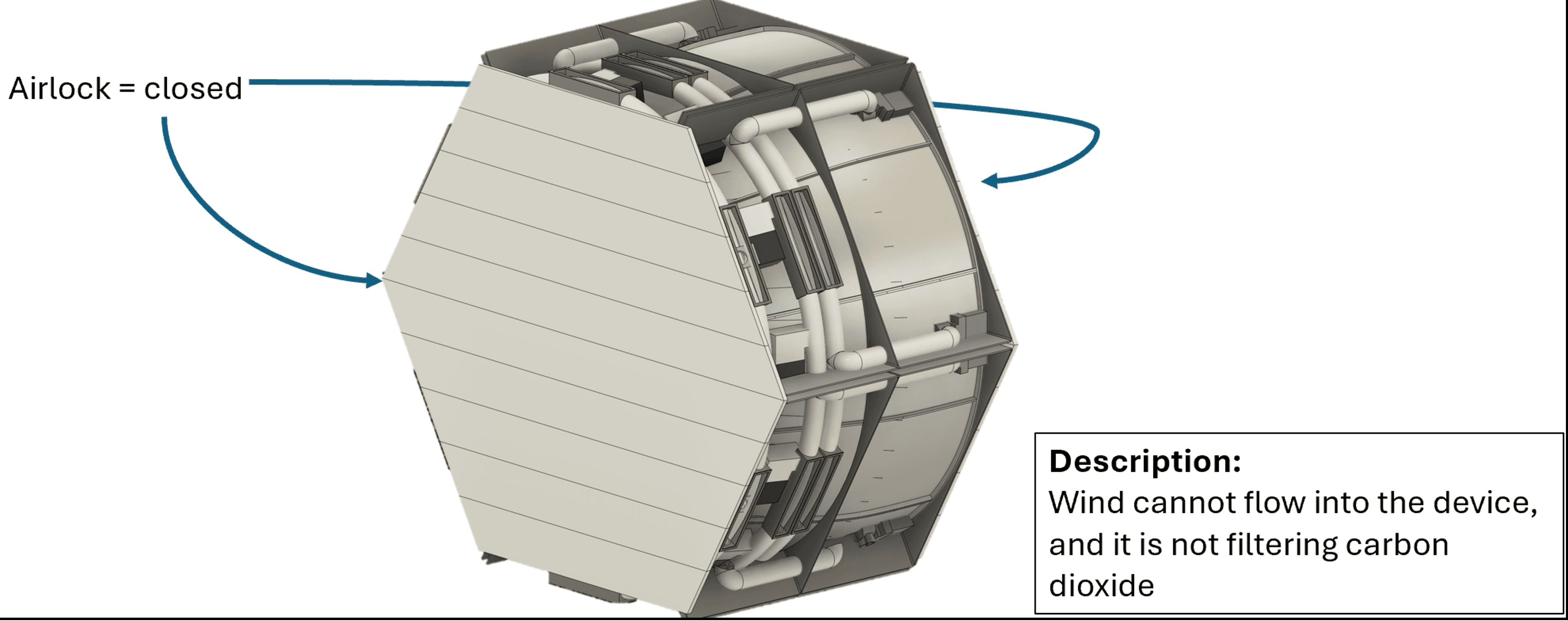
Phase 0: Initial State
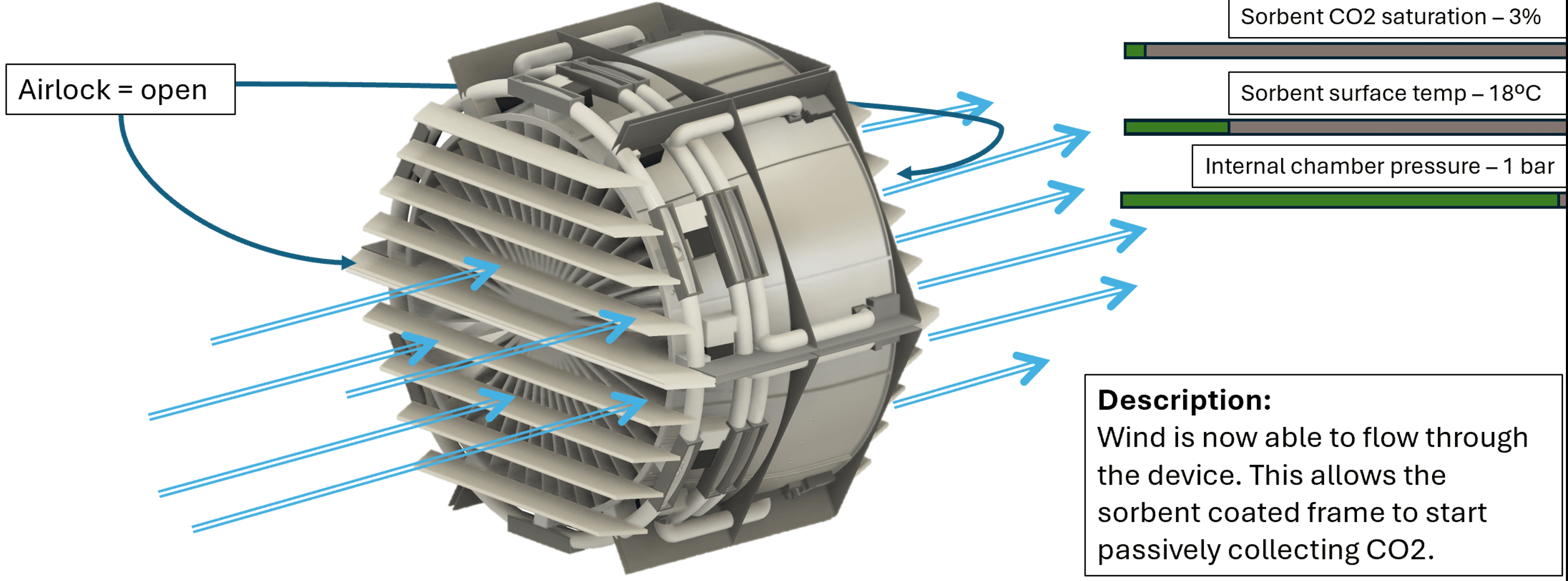
Phase 1: First Step
Phase 1: CO₂ Capture Process
Phase 1 Continued
Phase 1 Cont.: Extended Capture
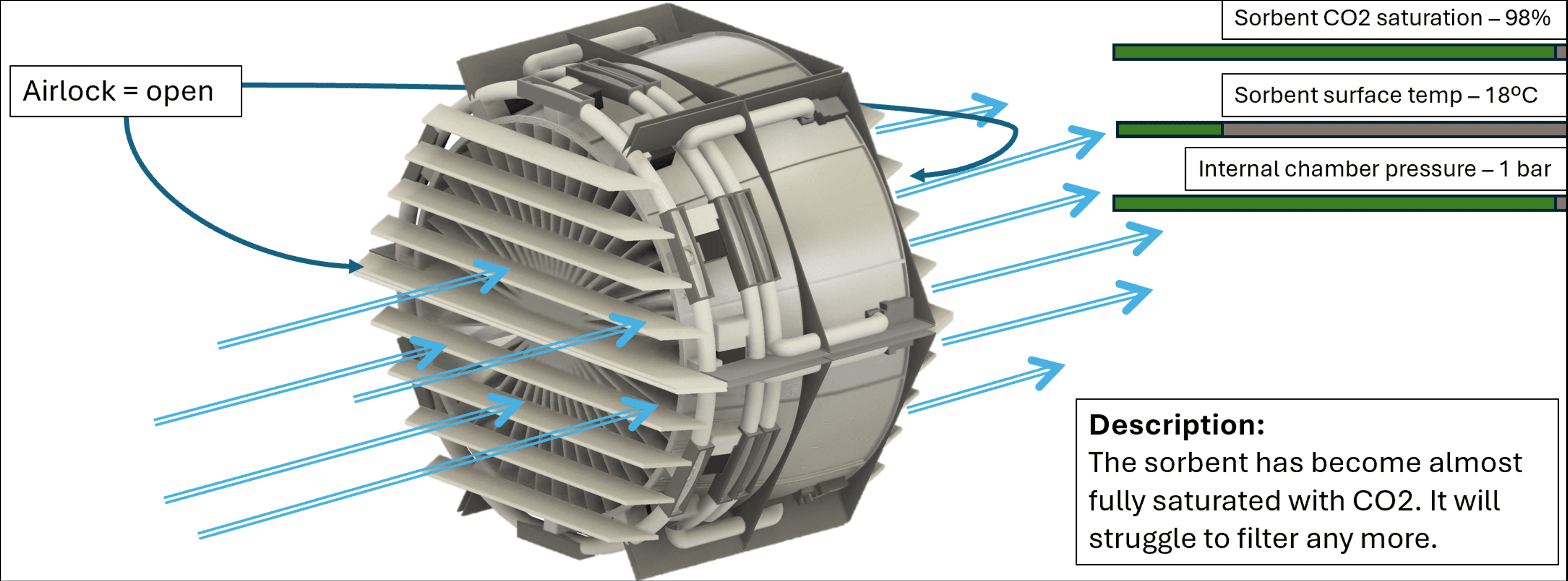
Phase 2
Phase 2: Sorbent Saturation
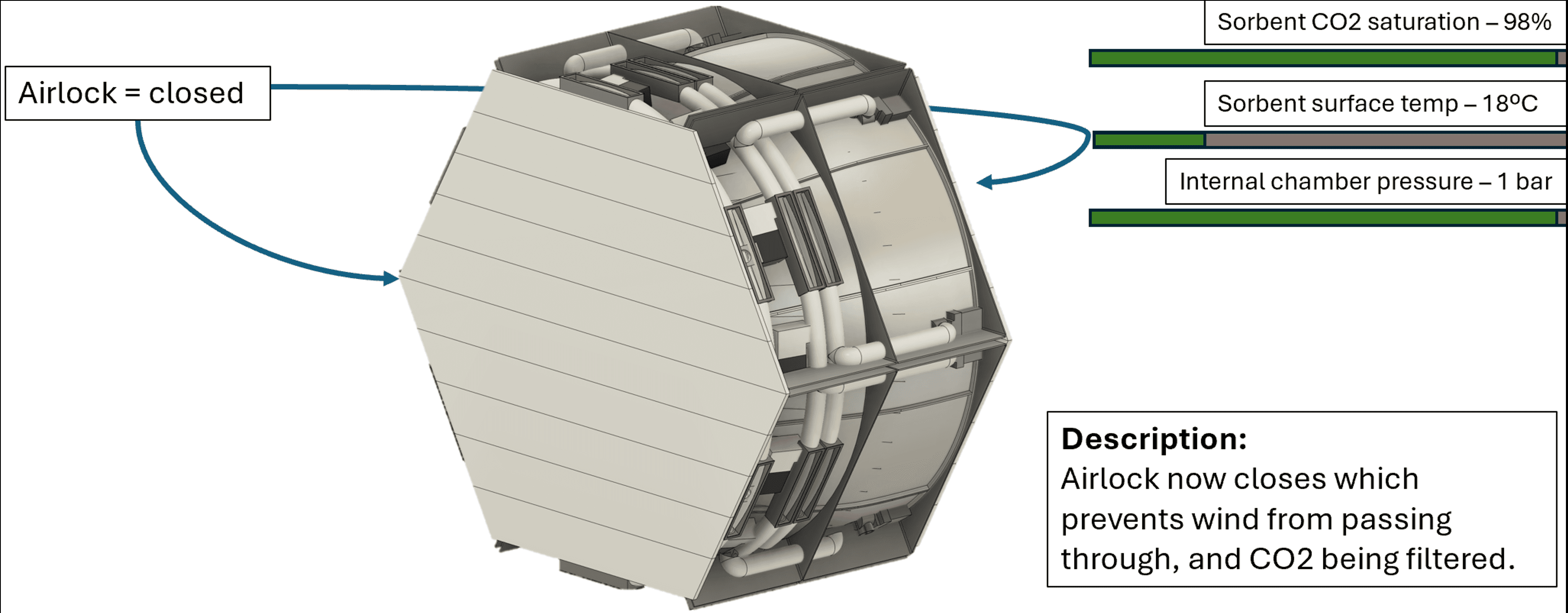
Phase 3
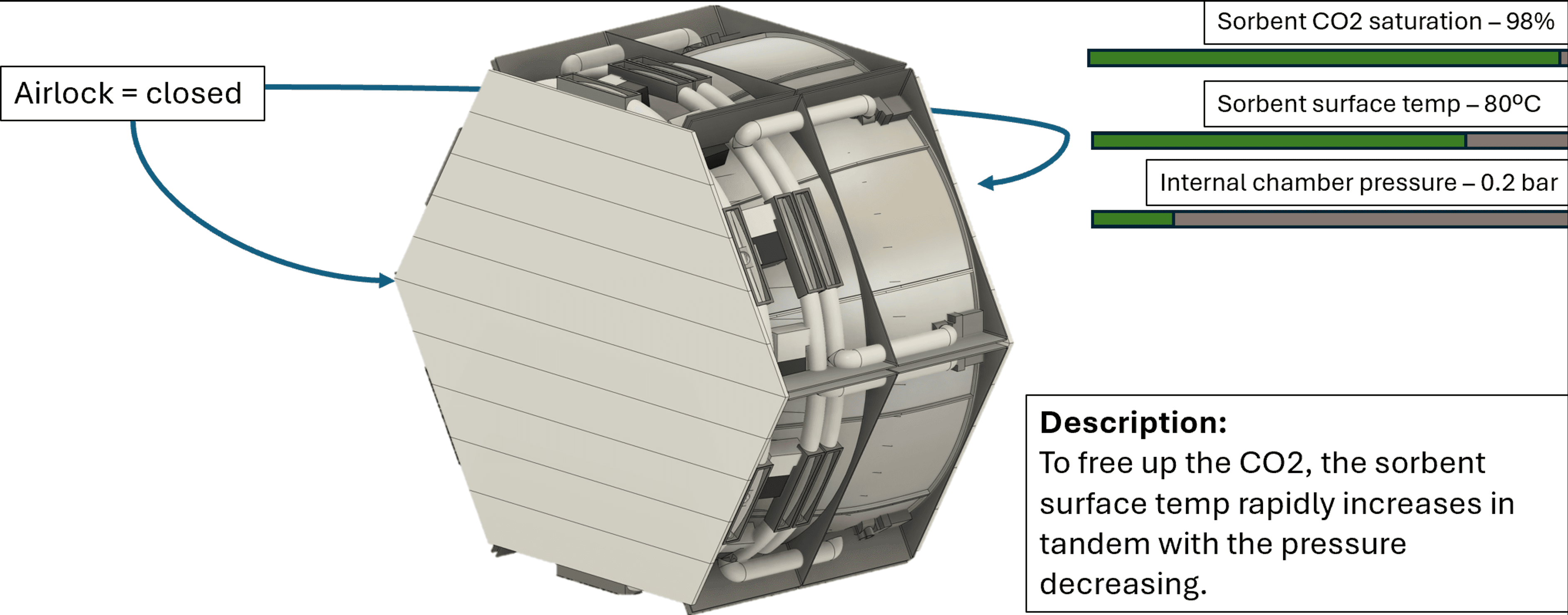
Phase 3: Desorption Initiation
Phase 4
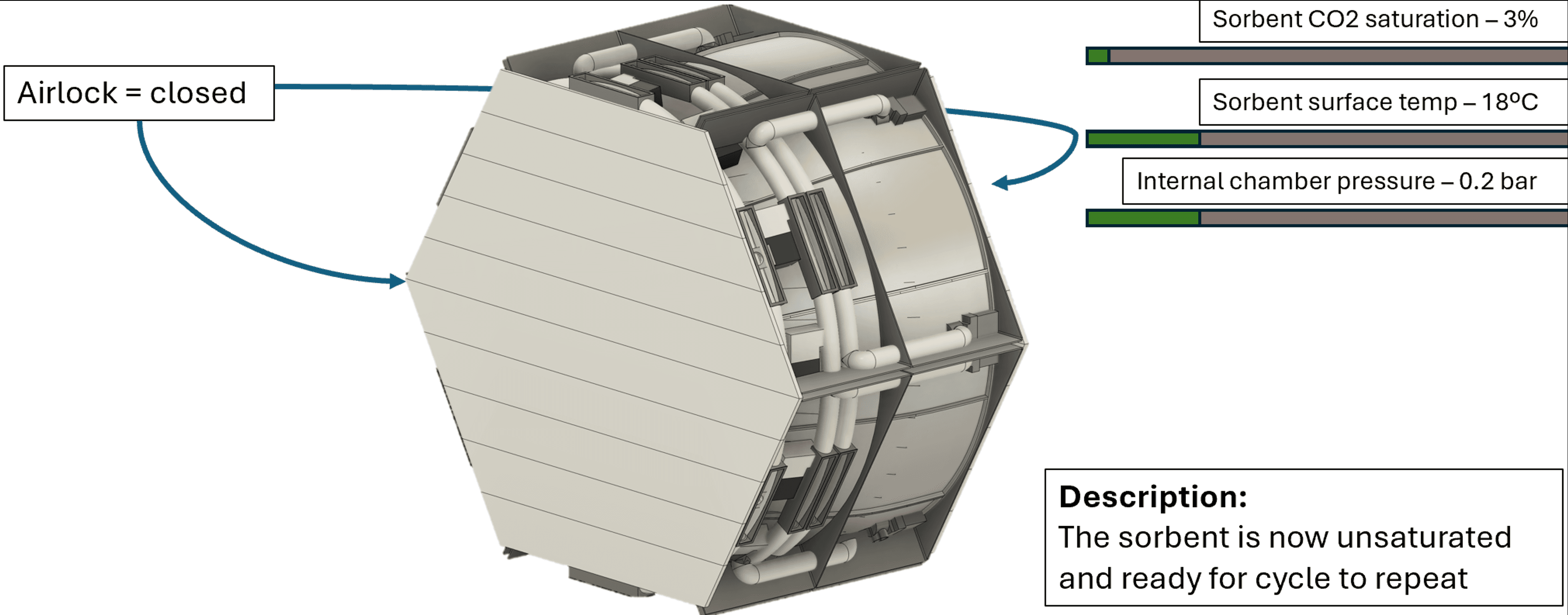
Phase 4: CO₂ Release & Regeneration

Materials Science

Chemical Engineering & Sorbent Fabrication

To develop an effective sorbent for CO₂ capture, I sourced, assessed, and combined a range of materials into a multi-stage fabrication process. All chemical selections were based on a thorough review of technical datasheets to ensure safe handling, compatibility, and appropriate laboratory storage.

The core materials included silica, cellulose acetate (CA), polyvinylpyrrolidone (PVP), polyethyleneimine (PEI), carbon fibre threads (CF), and a selection of solvents.

Core Materials
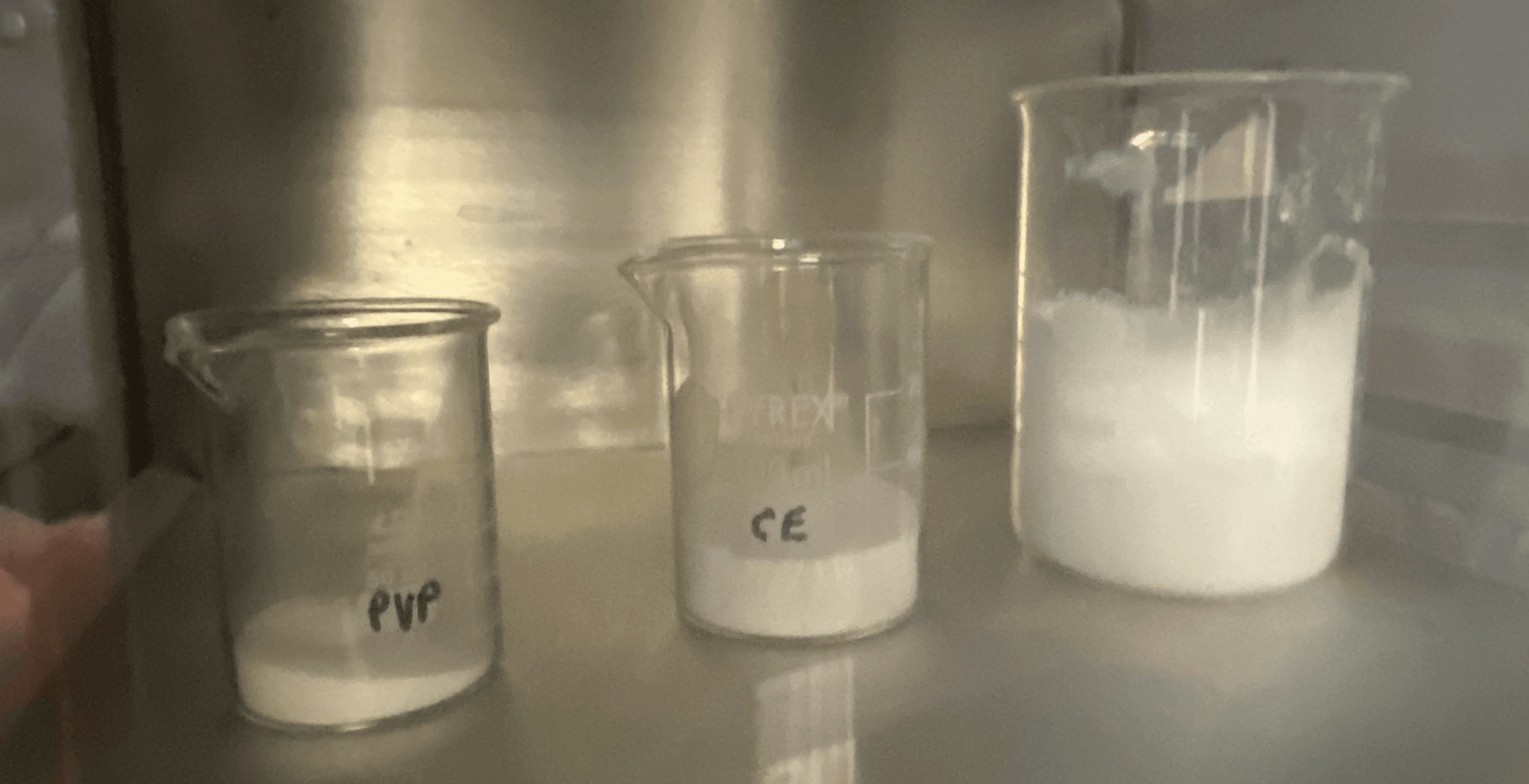
Fig. 5 — PVP, CE and Silica being dried under vacuum.

Design Rationale

Cellulose acetate formed the main matrix, binding silica particles together to create a mechanically stable and porous coating. The silica contributed a high microscopic surface area. PVP improved adhesion between the coating and the carbon fibre substrate.

Polyethyleneimine, rich in amine groups (-NH₂), provided the active CO₂ capture functionality. The chemical adsorption mechanism followed the carbamate formation reaction:

RNH₂ + CO₂ → RNHCOO⁻ + H⁺

This interaction allows the sorbent to selectively bind CO₂.

Fabrication Approach

The fabrication process began with drying hygroscopic materials under vacuum. A polymer–silica slurry was then prepared with controlled viscosity. This application was achieved using a custom-built roll-to-roll system, allowing precise feed control during dip-coating.

Laboratory Environment
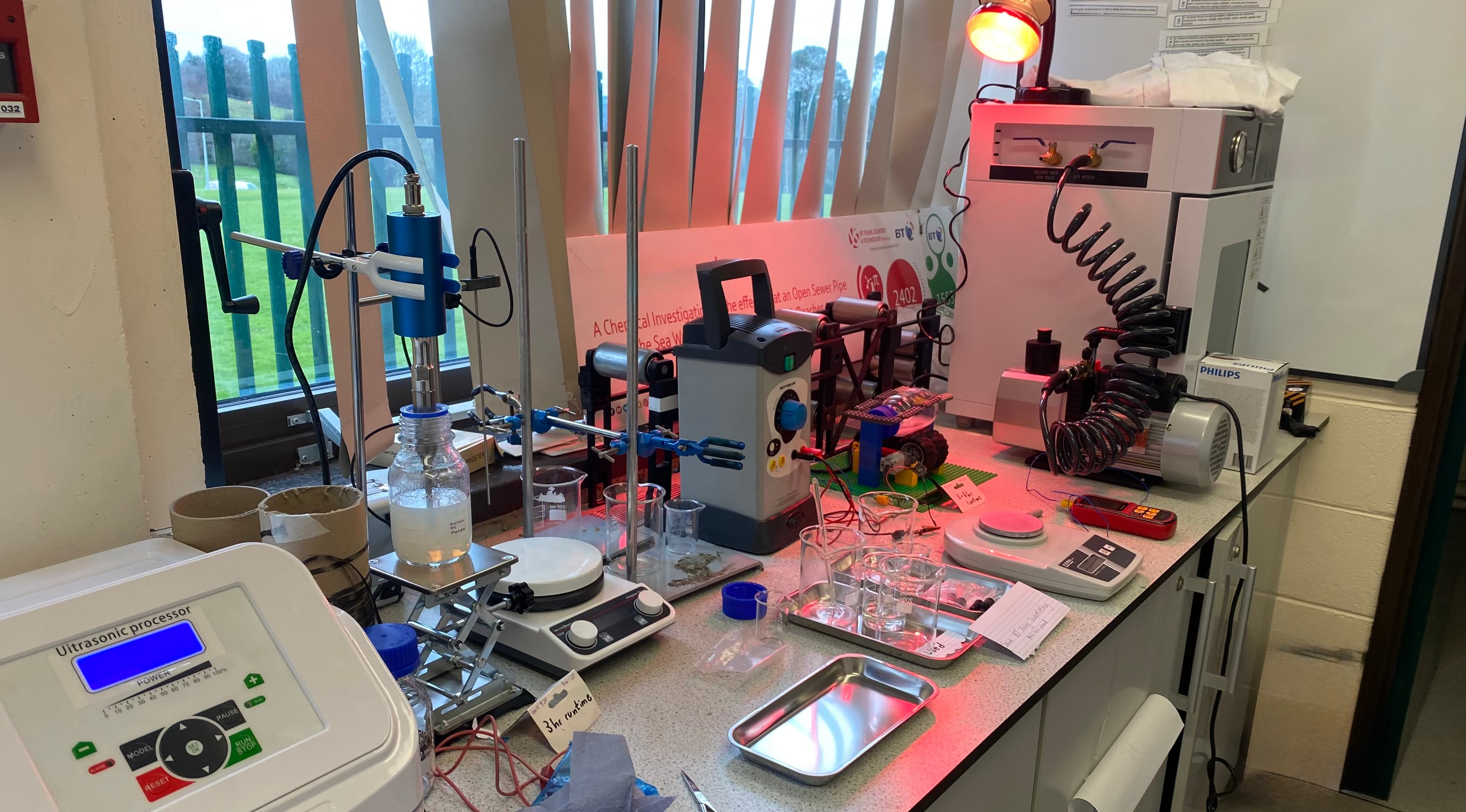
Fig. 6 — Laboratory Setup.
Fig. 7 — Cellulose Acetate Dissolution Process.

Performance Testing & Outcomes

Custom-built laboratory apparatus was used to characterise the sorbent. Adsorption capacity was measured by tracking changes in mass over time. The final sorbent coating combined mechanical stability, high surface area, and strong adhesion. Testing confirmed the intended CO₂ uptake and release profiles.

Project Ledger

Notable Skills

  • Chemical sorbent formulation and PEI impregnation for CO₂ capture
  • Roll-to-roll dip‑coating process development with custom-built apparatus
  • Phase inversion polymer processing for porous sorbent structures
  • CAD and DFM/DFA for modular, tessellating sheet‑metal modules
  • Sheet‑metal manufacturing (pre‑drilling, cold‑rolling, seam welding)
  • Fusion 360 structural analysis for vacuum load validation

Achievements

  • Patent granted for passive, modular Direct Air Capture design
  • Validated CO₂ adsorption/desorption performance and cyclic stability in laboratory testing
  • Built and tested full roll‑to‑roll coating prototype
  • Transitioned from 3D‑printed prototypes to production‑grade stainless‑steel modules

Publicity

Awards & Grants

  • Selected to represent Ireland at Expo 2025 in Osaka 🇯🇵
  • Best Overall Individual at BT Young Scientist Exhibition 2025
  • Analog Devices Gold Partner Award at BTYSTE 2025
  • ETB Green Innovation Award 2024
  • Patch Grant Award 2024
  • Emergent Ventures Winner 2024
  • 1st place Category Award at BTYSTE 2024
  • EPA Special Award at BTYSTE 2024