Cosimo de’ Medici is once said to have remarked “every painter paints himself.” It is a fitting statement from a man whose life is so intertwined with the greatest city of art in history, Florence. Cosimo was once the richest man in Florence, the head of a banking empire, and the effective ruler of a proud republic, yet he spent much of his life trying to appear as none of these things. Reading Christopher Hibbert’s The Rise and Fall of the House of Medici, what struck me most was not simply how much power Cosimo held, but how carefully he disguised it, and how deliberately he chose to leave behind something more lasting than power itself. It makes the eventual fall of the Medici land with all the more vigour.
A Family and a City
Cosimo inherited his position from his father, Giovanni, who built the foundations of the Medici bank. Cosimo and his brother Lorenzo carried that fortune forward, and the family’s influence would stretch across generations (almost 3 centuries in fact), reaching its most famous expression in Cosimo’s grandson, Lorenzo the Magnificent.
The Florentines prided themselves on being a democracy. Every two months, the names of eligible citizens were drawn from bags to form the city’s governing council, with one man chosen to head the city for that short term. The system was full of safeguards meant to keep compromised men out of office. For example, a citizen who was deeply in debt to another could be barred, since it’s reasonable to assume that he might be pressured into serving someone else’s interests.
On paper, this was a republic that no single family could take for themselves. In practice, as Cosimo’s life went on, it became obvious that only Medici allies were ever drawn to make up the governing council: the Signoria. Major decisions were run past Cosimo before they reached even the official head of the city, and foreign diplomats, particularly those from Milan, often went straight to Cosimo, bypassing the man who nominally led Florence. The democracy remained intact in form while its substance quietly shifted into Medici hands.
Rivals, Arrest, and Return
That power did not go unchallenged. The Albizzi, a rival noble family, saw the Medici as a threat and moved against them. Cosimo was summoned to the council palace. He suspected it meant trouble, but refusing would have meant exile and the confiscation of his property, so he went. A guard led him up the stairs, past the chamber where the council had already begun meeting, begrudgingly, yet obediently he followed the guard on further up, until he was locked in a cell.
The Albizzi and their allies debated what to do with him. Unwilling, or perhaps politically unable, to execute him, they settled on banishing him from Florence for ten years. The victory was short-lived. Pressure mounted from outside the city, the balance inside it shifted, and within about a year Cosimo was invited back. He returned stronger than before, and the Albizzi were never again able to challenge him. Cosimo’s real strength lay not in any office, or official title but in the web of money, friendship, and obligation that tied Florence and its neighbours to him, often whether they liked it or not. Despite the mixed relationship with all citizens, it is clear that in future generations of Medici rule, more than anything the Florentines came to miss the sense of stability with Cosimo de’ Medici under his unofficial rule.
The Appearance of Modesty
Cosimo understood that in Florence, visible wealth was dangerous. The city’s older culture, dating back to the 1300s, valued modest living, and Cosimo made a point of appearing more frugal than he really was. He paid more tax than most citizens and donated generously, so that no one truly knew how rich he was. Over time this culture of restraint faded, and later generations of Florentines displayed their wealth far more openly, but Cosimo belonged to the older way of thinking.
His restraint extended to politics. A man with his fortune could easily have torn up the city’s constitution and declared himself its lord. Cosimo never did. He kept out of public political life more than he needed to, preferring to govern from behind the scenes. His modesty was not quite a lie, but it was certainly a strategy.
That restraint had limits, however. Cosimo did not hesitate to ruin families or businesses that appeared to threaten his own. Behind the modest clothes and generous donations was a man who could be ruthless when his position was at stake.
Florence Among the Powers
Cosimo’s influence reached beyond the city walls. Florence’s traditional ally had been Venice, a great Renaissance power built on its fleet and its shipping trade. During Cosimo’s lifetime, Florence turned away from Venice and toward an alliance with Milan, a shift that reshaped the politics of the peninsula. Peace in Italy, as his era showed, came rarely and never lasted long.
The Church was an equally powerful player. The popes of the time were far more politically active than they are today, often searching for a reason to launch a holy war against the Turks. Tension also ran between the Catholic Church and the Greek Christians of the East, centred on Constantinople, a city heavy with history. The two churches disagreed over the origin of the Holy Spirit. In one telling moment of that debate, an adviser on the papal side produced a manuscript, realised that part of its wording undermined his own argument, and hurriedly tried to scratch out the passage. In his haste, he crossed out the wrong section. For a church that placed the word of God at its centre, it was hardly a flattering scene, and it shows how thoroughly politics and belief were tangled together in Cosimo’s world.
Books and Buildings
If Cosimo concealed his wealth in daily life, he spent it openly on one great passion: books. He poured an enormous amount of Medici bank money into collecting sacred and rare manuscripts, and he had a particular eye for monasteries, such as those of German monks, that undervalued the treasures on their shelves. His collection was not meant to stay private. He built a library intended to be opened to the public.
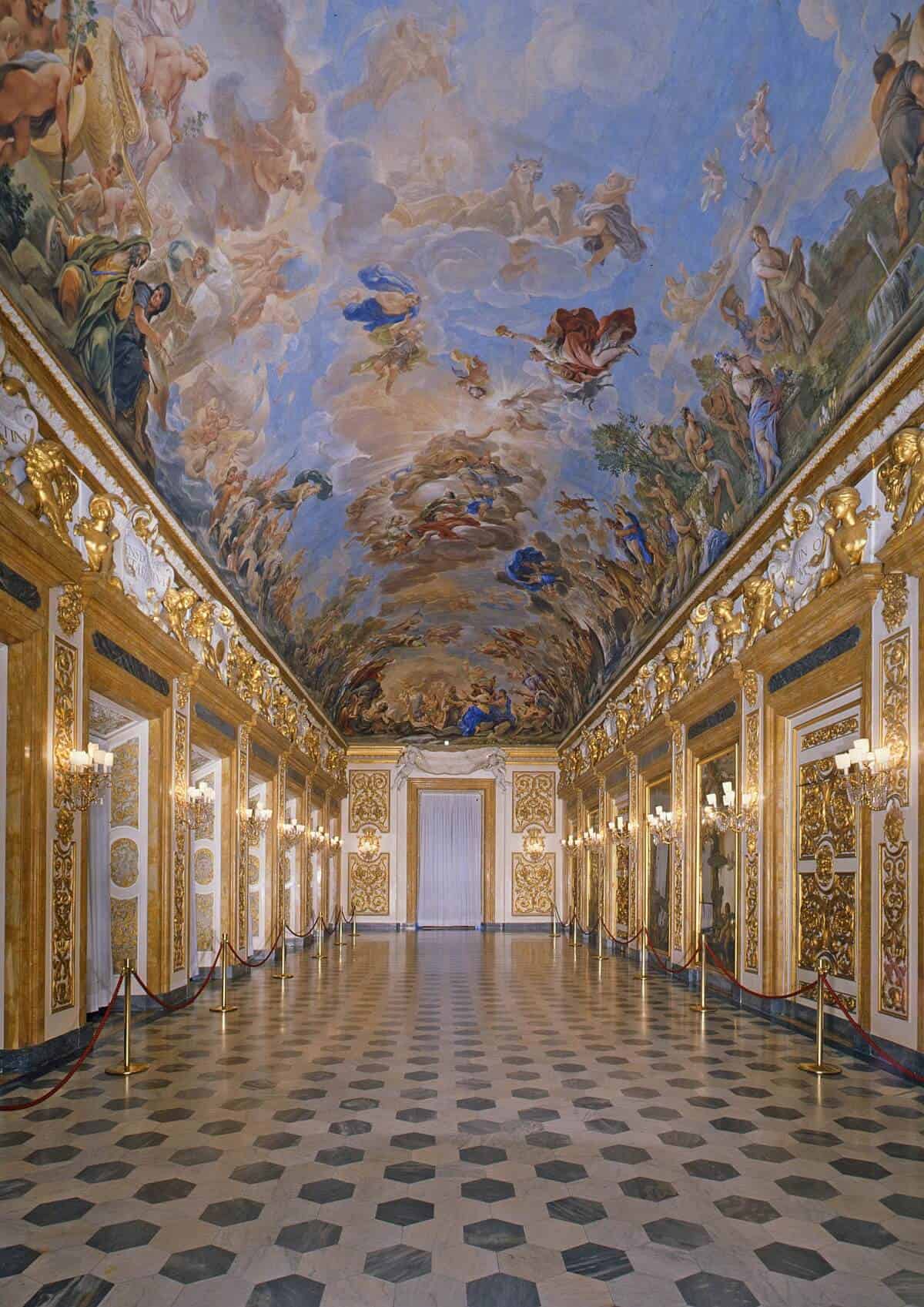
This generosity reflected a wider ideal that Cosimo helped instil in Florentine citizens: that paying taxes was a duty, but so was giving back to the city in whatever way one could. For Cosimo, this was also a clear-eyed calculation about memory. He believed that before long the city would turn against him and against the bank, but that the buildings he had helped create would stand for an age.
Conclusion
Cosimo de’ Medici died on the 1st of August, aged 75. His life was a study in contradictions: a democrat in form and a ruler in fact, a modest citizen who was the richest man in the city, a generous patron who could destroy his rivals without hesitation. He seems to have understood that reputation is fragile and power temporary, but that libraries, churches, and palaces endure.
In that sense, his own saying applies to him more than to anyone. If every painter does in fact paint himself, then Cosimo’s true self-portrait is not found in the records of his political manoeuvres or the practices of his bank. It is found in the culture of the city he left behind, a Florence shaped by his money, his books, and his buildings, still standing long after the man himself.
I’d wholeheartedly recommend Christopher Hibbert’s The Rise and Fall of the House of Medici to anyone interested in the Renaissance, especially if you’re curious about who paid for and commissioned so much of the period’s great art.